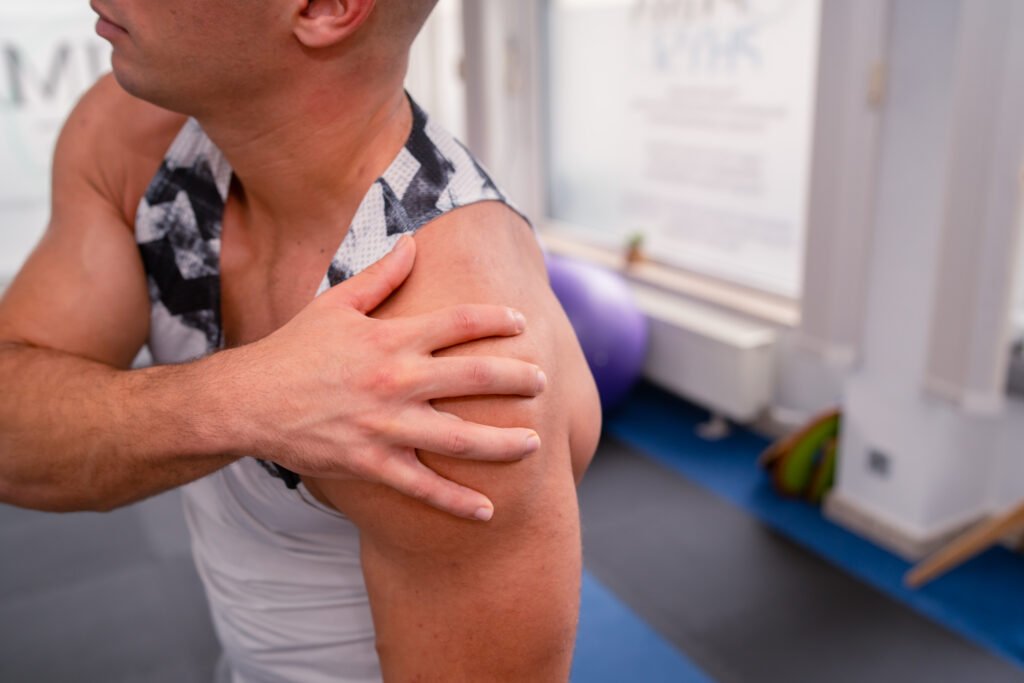
When can you return to sport after an injury? Discover the scientific criteria physiotherapists use to prevent relapses and get back to your activity safely.
When can you really return to sport after an injury?
You have just been injured.
After a few weeks of rest or rehabilitation, one question always comes back:
“Can I go back to sport?”
Unfortunately, there is no one-size-fits-all answer.
Some people return too early and get injured again. Others wait too long and needlessly lose physical capacity.
At Optima'CARE, we never rely solely on the time that has passed since your injury.
We use scientific criteria to check that your body is truly ready to resume training or competition.
In this article, we explain how this decision is made.
Why is returning too early dangerous?
No pain does not mean the tissue has fully healed.
After an injury, several things often remain reduced:
- muscle strength
- joint stability
- proprioception
- reflexes
- coordination
- tolerance to fatigue
It is precisely this gap between “I feel fine” and “I am really ready” that explains most relapses.
💡 Did you know?
More than 50% of recurring muscle injuries (hamstrings, quadriceps...) happen in the first month after returning to sport.
The main cause is not a lack of rest…
👉 but returning too quickly or incomplete rehabilitation.
Return to sport is a process, not a date
For a long time, the recommendations were simple:
“Wait six weeks.”
Today, sports medicine knows that this approach is not enough.
Two athletes with exactly the same injury can recover at completely different speeds.
The decision depends in particular on:
- your age
- your injury history
- your sport
- your level
- your job
- your motivation
- your progress during rehabilitation
- the results of functional tests
Every patient is unique.
The 5 essential criteria before returning
1. The pain must be gone
That seems obvious…
But pain must be absent in every important situation:
- at rest
- when the area is pressed
- during movement
- during exercises
- when accelerating
- when changing direction
- after exercise
💡 Did you know?
Some injuries (tendons, cartilage, stress fractures) can become only mildly painful before they have fully healed.
That is why how you feel is never enough on its own.
2. Muscle strength must be back to normal
After a few weeks off, a muscle can lose several tens of percent of its strength.
Even when this weakness is barely noticeable, it considerably increases the risk of recurrence.
The physiotherapist can measure:
- maximum strength
- endurance
- power
- muscle control
- right/left symmetry
For some injuries (such as after an anterior cruciate ligament rupture), at least 90 to 95% recovery is often required before returning to competition.
3. Mobility must be restored
An ankle missing a few degrees.
A knee that does not fully straighten.
A shoulder that rotates less.
These small deficits can change your whole sporting movement.
Over time, this leads to compensations and encourages relapses.
💡 Did you know?
Losing just a few degrees of mobility can be enough to change the way you run, jump or throw.
Your brain adapts... but not always in the right direction.
4. Your body must pass functional tests
This is probably the most important part.
Being able to walk is not enough.
Your body must be able to withstand the real demands of your sport.
Depending on your discipline, we can test:
- balance
- proprioception
- jumping
- landing
- changes of direction
- sprinting
- acceleration
- braking
- endurance
- coordination
These tests gradually reproduce the movements you will perform in competition.
5. Your mind must be ready
An injury does not only affect the muscles.
It also affects the brain.
Many athletes say:
“I’m afraid to start again.”
This fear is normal.
But it directly affects your performance.
Returning to sport also involves:
- confidence
- motivation
- managing fear
- the ability to perform movements without hesitation
💡 Did you know?
Studies show that fear of re-injury is one of the best predictors of an incomplete return to sport after certain injuries, particularly after anterior cruciate ligament (ACL) reconstruction.
Why do athletes relapse?
The causes are often the same:
- ❌ Returning too quickly
- ❌ Training volume increased too suddenly
- ❌ Rehabilitation stopped too early
- ❌ Lack of strength
- ❌ Fatigue
- ❌ Poor motor control
💡 Did you know?
Researchers often talk about the ratio between acute load (what you do this week) and chronic load (what you usually do).
Increasing training load too sharply significantly increases the risk of injury.
In other words:
Your body hates changes that happen too fast.
Every injury has its own criteria
Return to sport after an ankle sprain
Before returning:
- ✔ No pain
- ✔ Balance restored
- ✔ Jumping without apprehension
- ✔ Controlled changes of direction
- ✔ Normal proprioception
After an anterior cruciate ligament (ACL) rupture
Time alone is never enough.
Returning also depends on:
- muscle strength
- the quality of jumps
- changes of support
- stability tests
- the patient’s confidence
After a muscle injury
The hamstrings and quadriceps carry a high risk of recurrence.
Returning requires:
- strength comparable to the healthy side
- equal flexibility
- progressive sprints
- changes of pace
- work under fatigue
After a shoulder dislocation
Returning depends in particular on:
- stability
- mobility
- rotator cuff strength
- the type of sport played
A rugby player will not have the same requirements as a swimmer or a tennis player.
How do we assess your return to sport at Optima'CARE?
We use an approach based on international recommendations.
Our assessment includes in particular:
- ✅ Full analysis of your injury
- ✅ Assessment of your mobility
- ✅ Muscle strength tests
- ✅ Balance tests
- ✅ Functional tests
- ✅ Analysis of the movements specific to your sport
- ✅ Assessment of your confidence
- ✅ Advice for a gradual return
The goal is not simply to get rid of the pain.
Our goal is for you to keep playing your sport for months and years after your injury.
The most common mistakes ❌
- Returning as soon as the pain disappears.
- Stopping physiotherapy at the first signs of progress.
- Neglecting strength training.
- Forgetting balance and proprioception work.
- Wanting to get back to your pre-injury level straight away.
- Increasing training load too quickly.
Good habits ✅
- ✔ Return gradually.
- ✔ Respect the stages of rehabilitation.
- ✔ Follow your physiotherapist’s recommendations.
- ✔ Keep strengthening even after returning.
- ✔ Do not compare your recovery with another athlete’s.
In summary
Returning to sport is a medical and functional decision based on several criteria.
Before returning, it is essential to regain:
- ✅ No pain
- ✅ Sufficient muscle strength
- ✅ Normal mobility
- ✅ Good motor control
- ✅ Functional capacities suited to your sport
- ✅ Restored confidence
Taking a few extra weeks to meet these criteria is often the best investment to avoid several more months on the sidelines.
Frequently asked questions
Can I return to sport as soon as it no longer hurts?
No. The disappearance of pain is a good sign, but it does not guarantee that the tissues have fully healed or that your strength, balance or coordination are back to normal.
How long should I wait before returning to sport?
There is no universal timeframe. Returning depends on the injury, your progress, functional tests and your sport.
How do I know if I am ready to return to sport?
An assessment by a physiotherapist evaluates pain, mobility, strength, balance, functional capacity and confidence before you return.
Why did I get injured again?
The most common causes are returning too quickly, a strength deficit, poor proprioception or an overly sudden increase in training load.
Should I keep doing the exercises after returning?
Yes. Strengthening and prevention exercises remain essential to limit the risk of recurrence.